

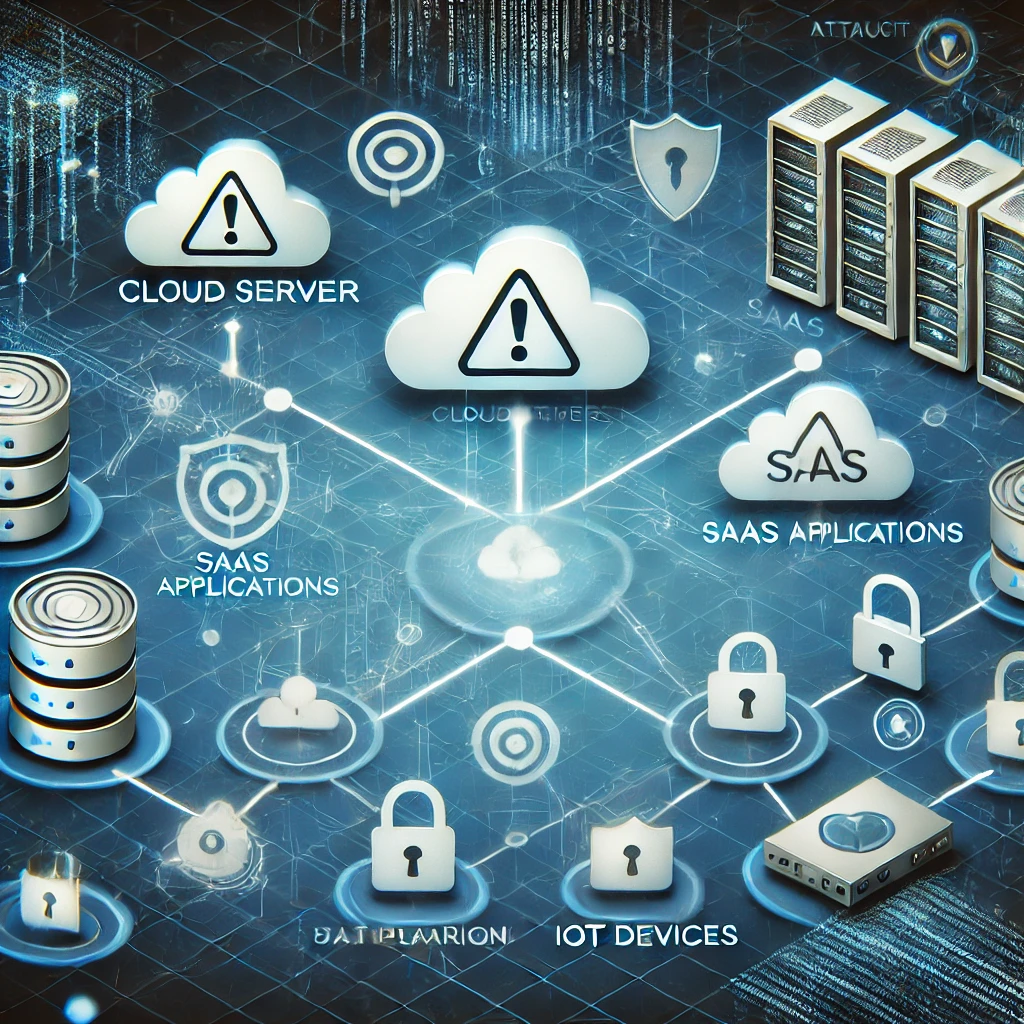
Cloud Assets and IoT Devices Targeted by Cyber Attacks
In today’s digital landscape, cloud assets and Internet of Things (IoT) devices have become prime targets for cyber attacks. Recent findings from the 2023 Thales Data Threat Report reveal that 53% of IT professionals in India identified their IoT devices as the biggest targets for cyber threats, followed closely by 41% citing cloud-based storage and 40% mentioning Software as a Service (SaaS) applications. This trend highlights a critical shift in the threat landscape as organizations increasingly rely on cloud services and interconnected devices.
The surge in cyber attacks can be attributed to the growing volume of sensitive data being stored in the cloud. The report indicates that 75% of respondents globally now classify over 40% of their cloud data as sensitive, up from 49% in 2022. As more organizations migrate their operations to the cloud, attackers are taking advantage of potential vulnerabilities associated with this transition. Misconfigurations, weak access controls, and inadequate security measures often leave cloud environments exposed to exploitation.
Human error plays a significant role in these vulnerabilities. According to the report, 52% of respondents in India attributed data breaches to misconfiguration or human error, a statistic mirrored globally at 55%. This underscores the need for organizations to implement robust training programs that educate employees about best practices for cloud security and IoT device management.
Moreover, IoT devices present unique challenges due to their often limited security features. Many devices are deployed with default settings that are easily exploitable, making them gateways for attackers to infiltrate networks. Common attack vectors include Distributed Denial of Service (DDoS) attacks, where compromised IoT devices are used to overwhelm network resources, rendering services unavailable.
To combat these threats, organizations must adopt a multi-layered security approach. This includes implementing strong authentication mechanisms, conducting regular security audits, and ensuring that all devices are updated with the latest firmware patches. Additionally, employing encryption for data at rest and in transit can help protect sensitive information from interception during transmission.
In conclusion, as organizations continue to embrace cloud technologies and IoT devices, the associated risks also increase. By understanding the vulnerabilities inherent in these systems and taking proactive measures to secure them, businesses can better protect their assets against the ever-evolving landscape of cyber threats.
References
- Thales Data Threat Report 2023 – CIO Dimension
- ECCouncil – Guide to IoT Security: Protecting Critical Networks Against Digital Assaults.
- Arxiv – Threat Analysis of Industrial Internet of Things Devices.
- ACM Digital Library – Attack and System Modeling Applied to IoT, Cloud, and Mobile Ecosystems.
Citations:
[1] https://ciodimension.com/cloud/cloud-assets-iot-devices-the-biggest-targets-for-cyber-attacks/
[2] https://arxiv.org/html/2405.16314v1
[3] https://dl.acm.org/doi/fullHtml/10.1145/3376123
[4] https://www.eccouncil.org/cybersecurity-exchange/network-security/guide-to-iot-security-protecting-critical-networks/
[5] https://www.eccouncil.org/cybersecurity-exchange/ethical-hacking/the-rise-of-iot-attacks-endpoint-protection-via-trending-technologies/
[6] https://azure.microsoft.com/en-gb/resources/cloud-computing-dictionary/what-is-iot/security/
[7] https://www.infosecurity-magazine.com/news/cloud-breaches-half-organizations/
[8] https://www.mdpi.com/2079-9292/11/1/16